
From books to tweets, from movies to reels- gen z prefers content that moves as quick as their thumbs.
Gen Z’s attention span is increasingly shortening due to the myriad of content available online. In a world where everything is at our fingertips and where every need is fulfilled in a matter of seconds, an ordinary Zoomer’s attention span challenges Blinkit’s delivery ETA. If it’s not swipeable or easily readable, they’re scrolling past it like an unsolicited Facebook friend request. Indian Gen Z prefer watching TV shows at 2x speed. This allows them to be updated with latest trends without spending hours on a single show. They see entertainment as something that should fit into their busy schedules, rather than something to fully immerse in.
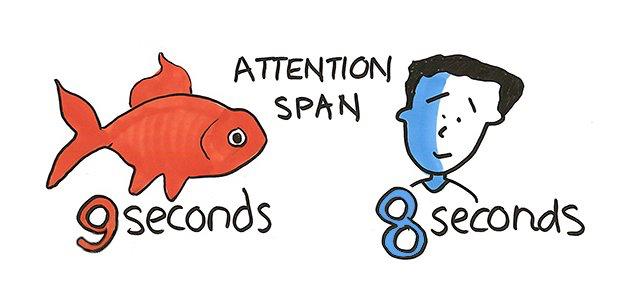
Image Credits: Google
Anouksha Gogoi, a 23 year-old mass communication student from OP Jindal University says that it is not just Gen L who is prey to short attention span, it’s everybody. “Older people are just as addicted, if not worse. We’re practically cyborgs at this point, incomplete without our devices.” Gogoi explains that because of this new normal, simple tasks like reading a book has become difficult. “I used to read a fair bit, about seven books in a span of months, but not anymore. I read about half that now, sometimes less. Most of my peers have actually stopped reading long-form books and have now resorted to audiobooks, while almost nobody can sit still and read a novel.” She adds, “Most people aren’t willing, or even able to focus anymore.”
Zoomers don’t consume content; it consumes them. Social media is designed to keep us hooked and has done so in such an effective way that we struggle to imagine our lives without our phones. In a recent study conducted by Golden Steps on March 5, 2025, titled, “Average Human Attention Span,” Gen Z’s attention span has declined from 12 seconds to 8.25 seconds in the last two decades, while teenagers are at 8 seconds, comparable to a Gen Z individual and a goldfish. Research suggests that the use of social media platforms like Instagram and Snapchat has significantly contributed to decreased attention span.

Image Credits: Google
Shruti Hazarika, a 47-year-old Delhi-based psychologist says, tha growing up in a hyper-digital world where everything competes for their attention is the reason behind this problem we face today. “Instagram Reels and YouTube Shorts are designed to deliver quick bursts of entertainment, giving users instant dopamine hits. The faster, and more engaging the content, the higher the consumption. Deep reading or even sitting through a full conversation can feel exhausting in comparison.”

Image Credits: Aditi Bora, Styled by Aditi Bora
Model in frame: Kripani Ajmani and Riya Singh
Pranav Pahuja, a 27-year-old IT consultant based in Gurgaon expresses how he relates the issue of narrowing attention span with the availability of Al tools in the recent years. “One thing I have noticed is that I,or consulting professionals are relying too much on Al tools like Copilot or ChatGPT. It’s true that AI is helpful, but young developers simply do not want to figure out things manually.” Pahuja argues how Al boosts efficiency, but undermines foundational learning. “I think this stems out from the present mindset of wanting Henching quick and the evere ereasing concintrain ming nev
tools, but often struggle with long, tedious work calls and debugging sessions.”
To a generation that is ravenous for content and has an 8-second duration cap, are we looking down the barrel of the declining human cognitive capacity? If you believe so, how do we fix it?


 third clique
Leave a comment